Table Of Content

Adjacent to the utility area was probably a family bedroom, which would have contained more than one bed. Children often shared rooms and even beds – having a bedroom to oneself was very uncommon. Since the Richardson, Owens, and Thomas families all had children, a enslaved nursemaid probably slept on a pallet in the bedroom with them. The room is presently decorated as a bedchamber with a Jamaican mahogany bed (c. 1825). Other furniture common to such a bedroom is a dressing table (c. 1820) and an armoire (c. 1800). Several portraits and paintings from the Telfair’s collection adorn the walls, including Thomas Sully’s Guilelmina Pickett Dalrymple Magruder of 1852.
Explore 19th Century Savannah at the Owens-Thomas House & Slave Quarters
Visitors will experience an inclusive interpretation of not only the wealthy families that inhabited this home for a span of over 100 years, but of also the enslaved people who lived and labored here. Reinterpreted Slave QuartersPreviously, the Owens-Thomas House slave quarters was used as an area for visitors to await the beginning of tours. This arrangement created the illusion that this space was less valued than the main house. The interpretation of this space—recognized as one of the best-preserved urban slave quarters in the South—will bring new awareness to an important piece of American history.
The Owens-Thomas House and Slave Quarters
We recommend showing up as early as possible if you have a large party or would like to reserve a particular tour time that day. SAVANNAH, GA (October 5, 2022) — On September 29, Telfair Museums approved the purchase of Her Empty Vanity, a large-scale work by Savannah-based artist Suzanne Jackson, from Ortuzar Projects. Driven by Telfair’s commitment to the collection and exhibition of historically underrepresented artists, the acquisition of Jackson’s work expands the museum’s collection of contemporary art. The exhibition features 42 signature works made between 1959–2018, alongside ephemera such as photographs, letters, periodicals, and journals. Once you’ve completed this audio tour of the Owens-Thomas House & Slave Quarters, please visit our other museums.
Richmond Barthé – PRIDE Week Curator’s Tour

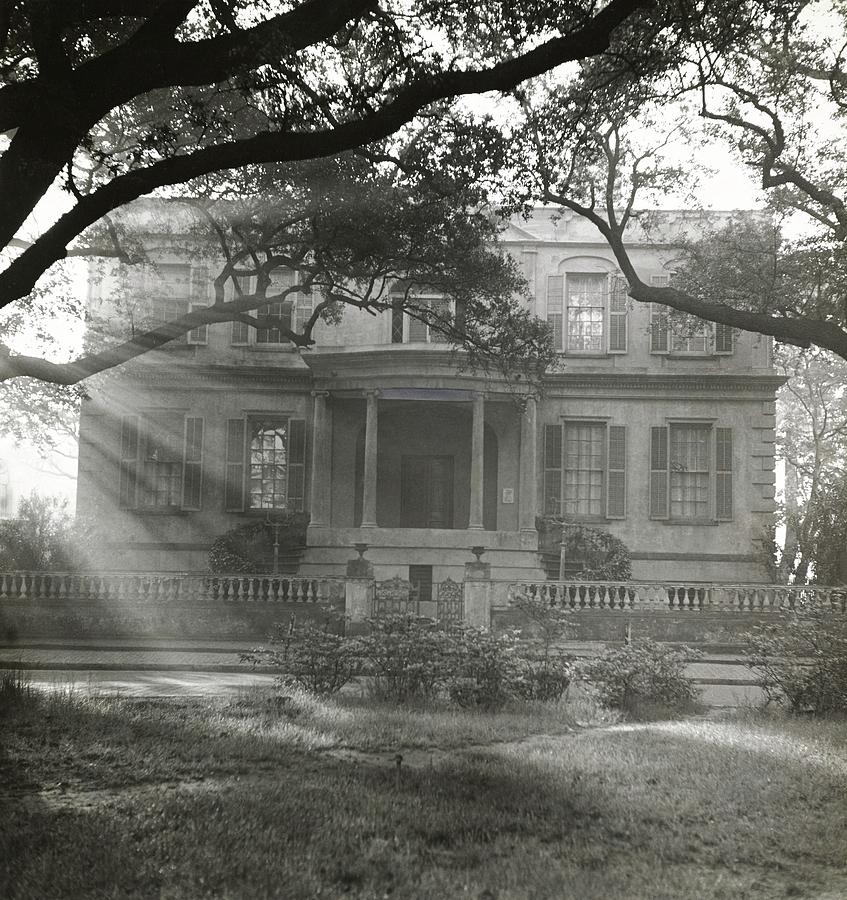
A pleasure-loving and extravagant man, the prince was also a discriminating patron of the arts and was recognized as the leading tastemaker of his day in decorative arts, architecture, furniture design, and interior decoration. Orientation Gallery (Carriage House)Telfair Museums has converted the conserved carriage house into a state-of-the-art visitor orientation gallery where visitors will begin their tours (moving this activity out of the slave quarters). Now a National Historic Landmark, the property boasts a carefully curated mansion with a formal parterre garden and an original carriage house, which includes the only intact urban slave quarters open to the public in Savannah. The Owens-Thomas House slave quarters is complete with the nation’s largest expanse of slave-applied haint blue paint, made from indigo and thought to ward off evil spirits. Visitors to the Owens-Thomas House & Slave Quarters are guided through one of the finest examples of Regency architecture in America as well as the original slave quarters designed to house the enslaved men, women and children who maintained it. The tour exits the carriage house and walks through the gardens to the rear of the main house, where guests are met by a space curated with more traditional twentieth-century house-museum practices.
Keeping in mind our limited capacity and staffing requirements, we request you make your reservation at least four weeks in advance. Built in 1819, this mansion exemplifies the neoclassical styles popular in England during the Regency period. The Owens-Thomas House & Slave Quarters allows visitors to explore the complicated relationships between the most and least powerful people in the city of Savannah in the early 19th century.
A visitor to the house may be awestruck upon arriving in the imposing front entrance hall. Two Corinthian columns resting on plinths visually separate the reception area from the magnificent stairway, which rises to a landing, splits into two flights and culminates in a bridge that spans the stairwell and connects the front and rear portions of the second floor. The architectural details, columns, and bases are painted in faux marbre, or false marble. Inlaid brass on the railings and stair treads once reflected the candlelight used to illuminate the steps. The woodwork is grained to look like red oak in another decorative paint treatment called faux bois, or false wood, and the cast-iron balusters are painted to look like bronze. To the right and left of the entrance hall are a front parlor and a large formal dining room.
Paint analysis indicates that there was a blue sky with clouds painted on the ceiling and glazing on the walls that replicated hanging fabric, both popular decorative paint treatments in English Regency houses. In another example of English Regency symmetry, the fireplace is flanked by two niches. One of the mansion’s most distinctive exterior features is the cast-iron balcony on its south facade. Although the use of cast iron was fairly common in England, this balcony represents the first large-scale structural application in American architecture. However, if you have a large group consisting of 12 people or more (i.e., a Girl Scout Troop, school groups, a large family/travelling tour group, etc.), visit telfair.org/group-tours/ for more information and advanced booking options.
She expects a few more offers to roll in Sunday when the open house runs from 2 to 4 p.m. As of Thursday, there are eight properties with open houses this weekend listed at $10 million or more. Getting inside is as simple as driving up, putting on a mask and writing your name down on the sign-in sheet.
Savannah history revived in Owens-Thomas House restoration - Savannah Morning News
Savannah history revived in Owens-Thomas House restoration.
Posted: Sun, 04 May 2014 07:00:00 GMT [source]
The Regency Style
Noted for its elegance, the English Regency style derives from classical influences. In comparison to the earlier rococo and baroque styles, Regency furniture and décor possessed simpler lines and more restrained ornamentation. Symmetry is a basic tenet of the style and a dominant design rationale throughout the house, beginning appropriately at its main entrance, with the curving double stairways that rise to the front porch.
Today, Jackson lives and works in Savannah, where she moved in 1996 to teach at the Savannah College of Art and Design. In 1967, Jackson moved to Los Angeles, where she attended Charles White’s drawing class at the Otis Art Institute. From 1968 to 1970, she opened and managed Gallery 32 in the MacArthur Park neighborhood, which engaged a community of artist peers including David Hammons, Betye Saar, and Emory Douglas, among others. The 200-year-old house, completed in 1819, was originally built for Richard Richardson, a Bermuda-born banker, merchant, and slave trader.
While some slaves still managed to receive an education, the people enslaved by the Owens appear to have remained illiterate, as indicated in the 1870 Census describing the literacy status of formerly enslaved. The project will be revealed at a free community opening day on November 17, 2018. It was the location of the kitchen, where meals were prepared with the aid of an iron stove imported from England. The laundry room with its original stone sink is there, and nearby is a room that was probably used as a cellar. Across the hall is a large room that was divided into four smaller rooms used for unknown purposes but possibly as the eating area for those enslaved.


No comments:
Post a Comment